

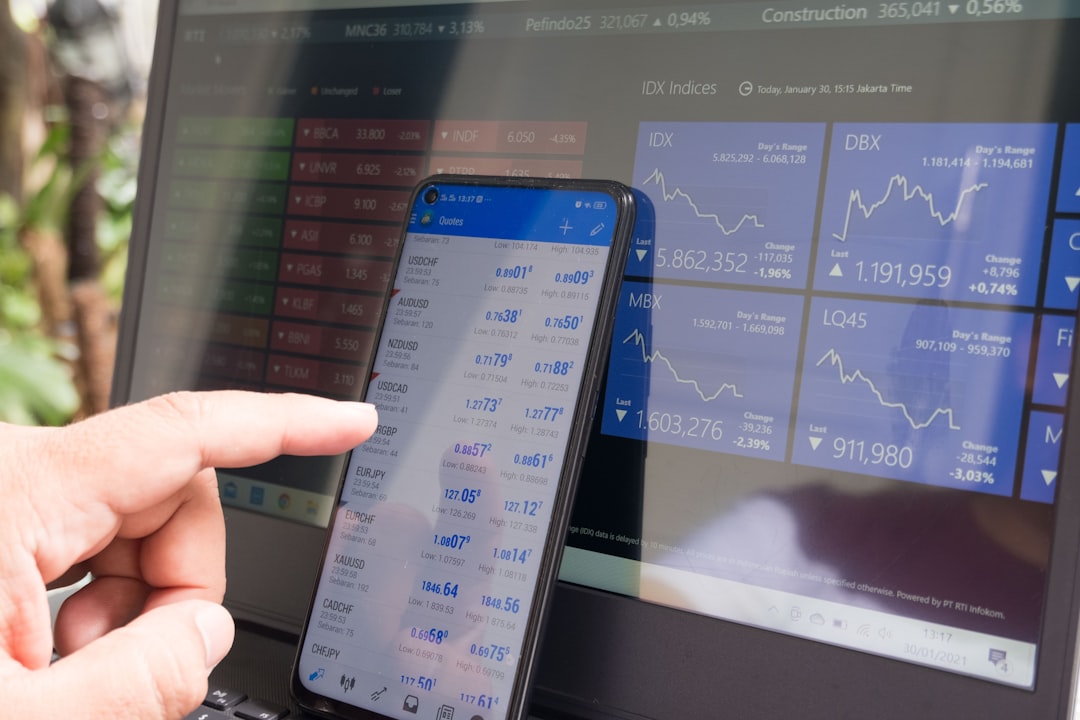
Speed is the currency of forex trading. Every tool in your trading setup must work efficiently—and your Android app is the most direct link between your analysis and the market. Traders who overlook app performance often discover the cost of that oversight at the worst possible moment.
In This Article
- What Does High-Performance Mean for a Forex Trading App on Android?
- How Do Real-Time Data Feeds Impact Trading Speed?
- Tick Data vs. Aggregated Data
- Latency Between Market and App
- Handling High-Volatility Events
- What Role Does User Interface Design Play in Trading Efficiency?
- Intuitive Navigation
- Clear Visual Hierarchy
- Gesture-Based Controls
- How Should Traders Evaluate App Reliability Over Time?
- Session Continuity
- Update Frequency and Quality
- User Community Feedback
- What Network Conditions Affect Android Forex App Performance?
- 4G vs. 5G Connectivity
- Wi-Fi Stability
- VPN Considerations
- How Can Traders Optimize Their Android Device for Forex Trading?
- Building a Performance-First Trading Setup
This article examines the practical performance realities of using a forex trading app on Android, covering what high performance looks like, how to identify gaps in your current setup, and what questions to ask when evaluating new platforms.
What Does High-Performance Mean for a Forex Trading App on Android?
High performance in a trading context goes beyond fast loading screens. It encompasses the entire chain of events from the moment a trader identifies an opportunity to the moment a position is confirmed open in the market.
A high-performance forex trading app android platform handles real-time data streams without stuttering, executes orders within milliseconds, and maintains consistent behavior across trading sessions. When all of these elements work in harmony, the trader can focus on strategy rather than fighting with their tools.
Low-performance apps, by contrast, introduce friction at every step—slow chart loads, unresponsive buttons, and inconsistent data feeds that undermine confidence in every decision.
How Do Real-Time Data Feeds Impact Trading Speed?
The accuracy and frequency of price data flowing into your app determines the quality of every trading decision you make.
Tick Data vs. Aggregated Data
Some apps display tick-by-tick price changes, giving traders the most granular view of market movement. Others aggregate price data into intervals, which simplifies the display but reduces resolution. For high-frequency strategies, tick data is essential. For longer-term traders, aggregated feeds may be sufficient.
Latency Between Market and App
Every data feed carries some delay between the source—a liquidity provider or exchange—and your screen. Apps with tighter server connections and more direct data routing deliver lower latency. Lower latency means more accurate prices and better-timed entries.
Handling High-Volatility Events
News events and economic releases generate enormous data volumes in short periods. Apps that handle these spikes gracefully—without freezing or dropping data—demonstrate robust infrastructure. Those that struggle during high-volatility moments are a liability precisely when clarity is most needed.
What Role Does User Interface Design Play in Trading Efficiency?
Performance isn’t solely about what’s happening under the hood. The design of the interface determines how quickly a trader can act on what they see.
Intuitive Navigation
An app that requires multiple taps to reach the order entry screen costs time. The best trading apps minimize the steps between chart analysis and trade execution. Customizable layouts that place critical functions within one tap are especially valuable.
Clear Visual Hierarchy
Charts, price levels, account balances, and open positions should be visually distinct and easy to read at a glance. Apps that present information cleanly reduce cognitive load, which is particularly important during fast-moving markets when focus is at a premium.
Gesture-Based Controls
Pinch-to-zoom on charts, swipe-to-switch between instruments, and long-press for quick order options are design elements that accelerate workflow. Apps that incorporate intuitive gesture controls feel faster to use, even at the same underlying technical speed.
How Should Traders Evaluate App Reliability Over Time?
Short-term testing reveals some performance characteristics, but reliability is proven over weeks and months of consistent use.
Session Continuity
Does the app maintain your layout, watchlists, and open chart configurations between sessions? Platforms that restore your workspace automatically save time and reduce the risk of errors caused by reconfiguring settings before each trading session.
Update Frequency and Quality
Regular app updates signal active development and a commitment to performance improvements. Review update histories to understand how responsive the development team is to reported issues. Frequent, meaningful updates are a positive indicator.
User Community Feedback
Experienced traders share performance observations in forums and trading communities. Reading through genuine user experiences—particularly around execution speed and app stability—provides real-world insight that specification sheets cannot.
What Network Conditions Affect Android Forex App Performance?
Your network quality has a direct impact on how well even the best app performs.
4G vs. 5G Connectivity
5G networks offer substantially lower latency than 4G, which translates into faster data delivery and quicker order transmission. Traders who operate primarily on mobile connections benefit meaningfully from upgrading to 5G-compatible devices.
Wi-Fi Stability
A stable Wi-Fi connection generally outperforms mobile data for sustained trading sessions. However, connection drops—even brief ones—can disrupt price feeds and order confirmations. Apps that handle reconnection gracefully protect traders from the consequences of intermittent connectivity.
VPN Considerations
Some traders use VPNs for security or regional access purposes. VPNs add a routing layer that increases latency. If you use a VPN, test your app’s performance with it active and compare it to a direct connection to understand the trade-off.
How Can Traders Optimize Their Android Device for Forex Trading?
The app operates within the environment your device provides. Optimizing that environment improves performance across every metric.
Closing background applications before a trading session frees up RAM and processing power. Keeping the operating system and trading app updated ensures compatibility with the latest performance improvements. Enabling performance or battery-unrestricted modes for your trading app prevents the operating system from limiting its background processes.
Screen brightness, notification settings, and display timeout also contribute to a focused trading environment. Small optimizations accumulate into a noticeably smoother overall experience.
Building a Performance-First Trading Setup
Forex trading on Android is a serious and viable approach to market participation—provided the tools are chosen and configured with performance in mind.
Start by defining your trading style and identifying the performance requirements it demands. Test platforms thoroughly under realistic conditions. Evaluate your device’s capabilities and ensure your network connection is as stable as possible.
A performance-first mindset, applied consistently to every layer of your trading setup, gives you the technical foundation to execute your strategy without compromise.
What You Need to Know
- High performance for a forex trading app on Android includes fast order execution, real-time data handling, and consistent behavior across sessions.
- Low-performance trading apps lead to frictions such as slow chart loads and inconsistent data feeds that can undermine trading decisions.
- The accuracy of trading decisions relies heavily on the type and frequency of price data received, with tick data being essential for high-frequency strategies.
- User interface design plays a critical role in trading efficiency, with intuitive navigation and clear visual hierarchy reducing cognitive load during fast-moving markets.
- Reliable app performance is determined over time by session continuity, update frequency, and user community feedback regarding execution speed and stability.
- Network conditions, including the use of 5G connectivity and stable Wi-Fi, significantly impact the performance of forex trading apps on Android.